
 0
0
0
0
I was born a female human animal.
Leonora Carrington
Many (…) are desperately searching for those pockets of silence where we can root and grow.
Mark Rothko
Imagine…
John Lennon
The exhibition is titled The Womb, a choice that deliberately translates only one layer of the Polish word matecznik. Rooted in the word matka (mother), matecznik carries a dense yet coherent field of meanings that extends far beyond any direct English equivalent. It refers at once to a site of origin, care, and protection — a space where life begins, is sheltered, and allowed to grow.
In apiculture, a matecznik is the cell in which a new queen bee is born; in forestry, it denotes a secluded sanctuary deep within the forest, set apart from hunting, where animals can safely raise their young; in horticulture, it is a protected ground where new trees are cultivated. More broadly, the term expands to describe a refuge of tradition, a birthplace of ideas, and a space in which identity is nurtured and sustained.
The Womb foregrounds the generative and embodied dimension of this semantic field, while the Polish matecznik continues to resonate in the background — as a sanctuary of life: an intimate refuge where what is fragile can find care, recover, and fully unfold its potential.
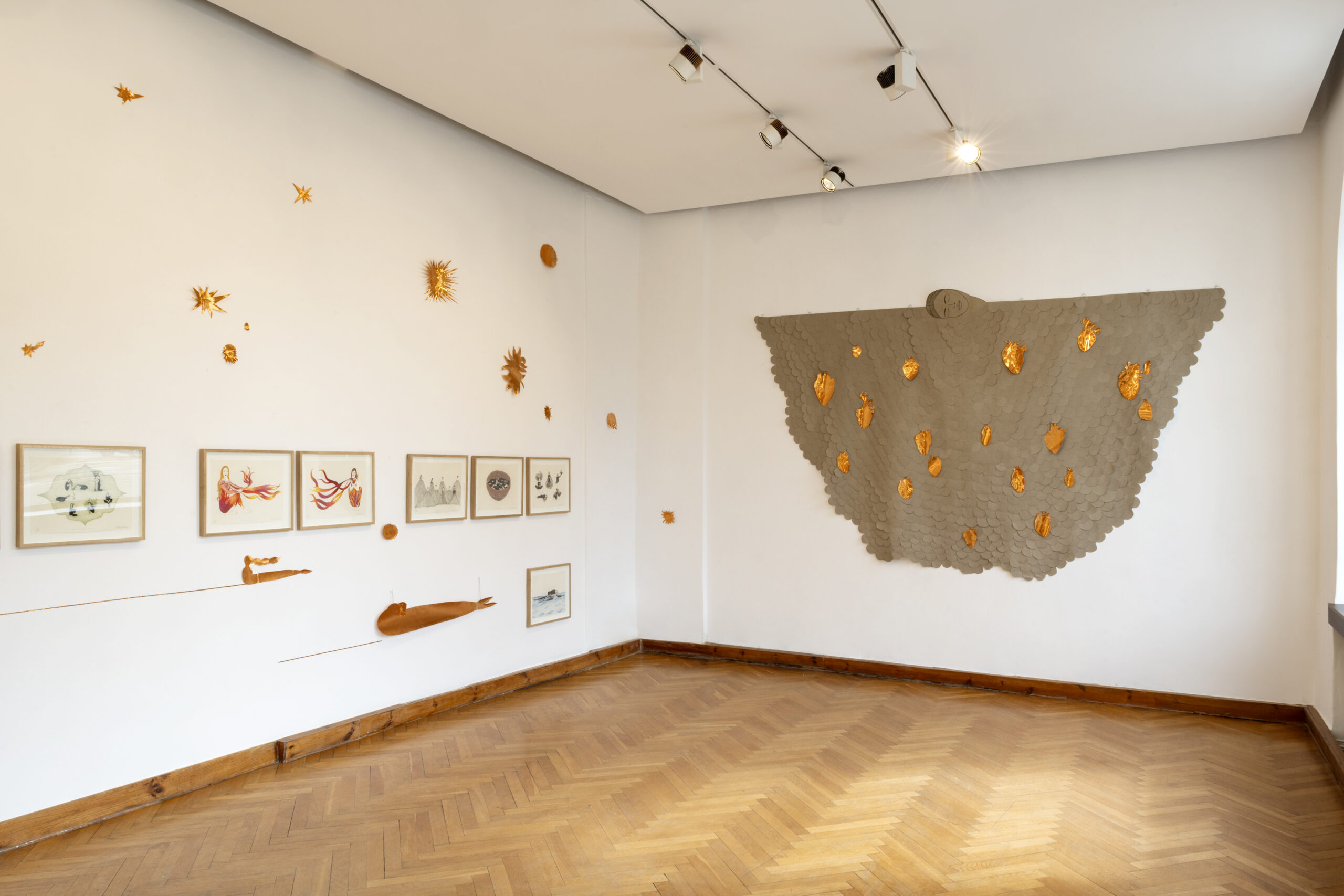
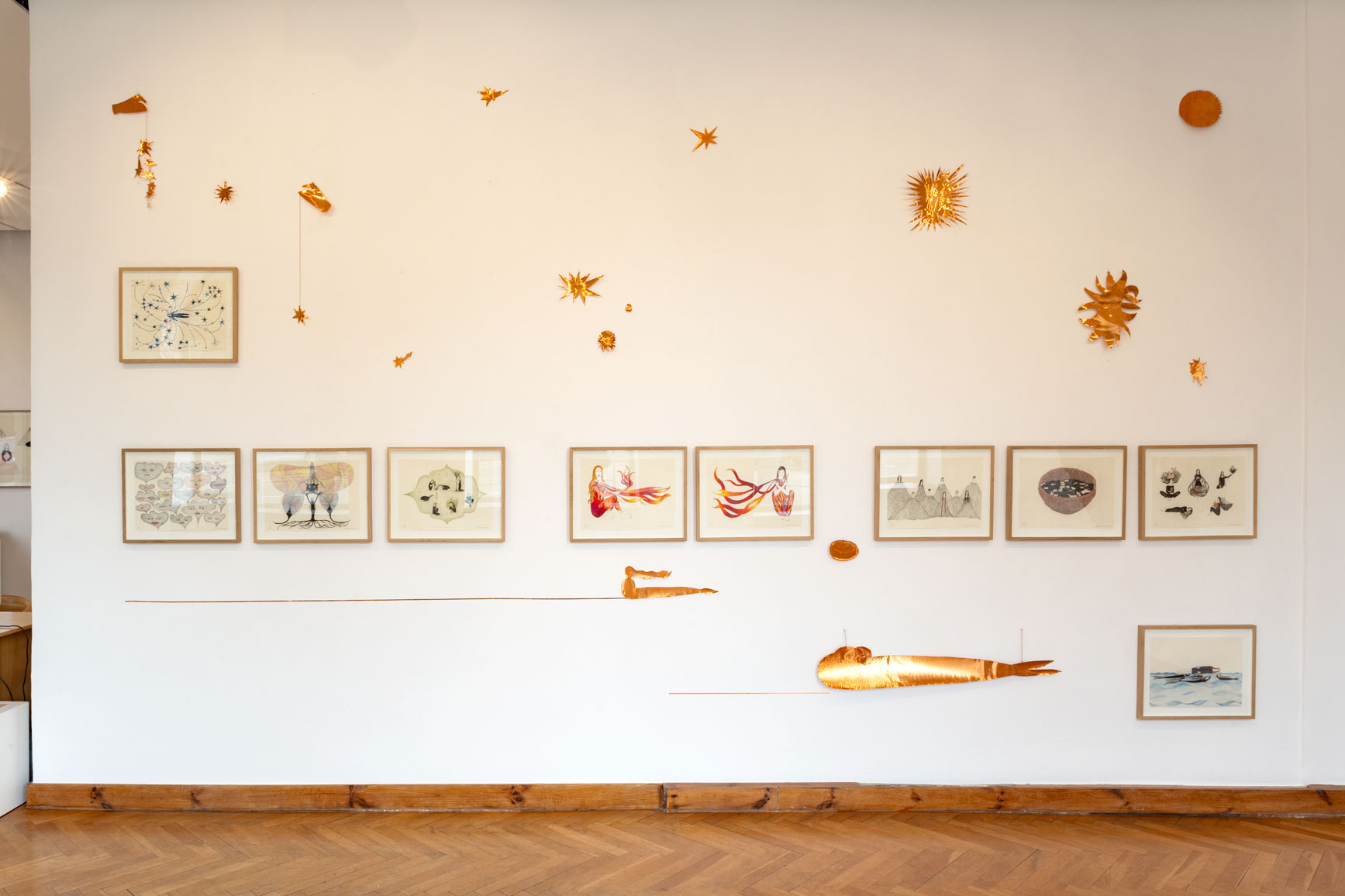
Małgorzata Malwina Niespodziewana’s latest exhibition grows out of such a space. The Womb operates as both a metaphor for shelter and a proposition for reimagining the world through coexistence — a kind of personal retreat into an idealized realm, a utopia in which there is space for everyone and everything: humans, animals, plants, stones. This imagined world — gentle, safe, and open — is both a dream and a strategy for survival.
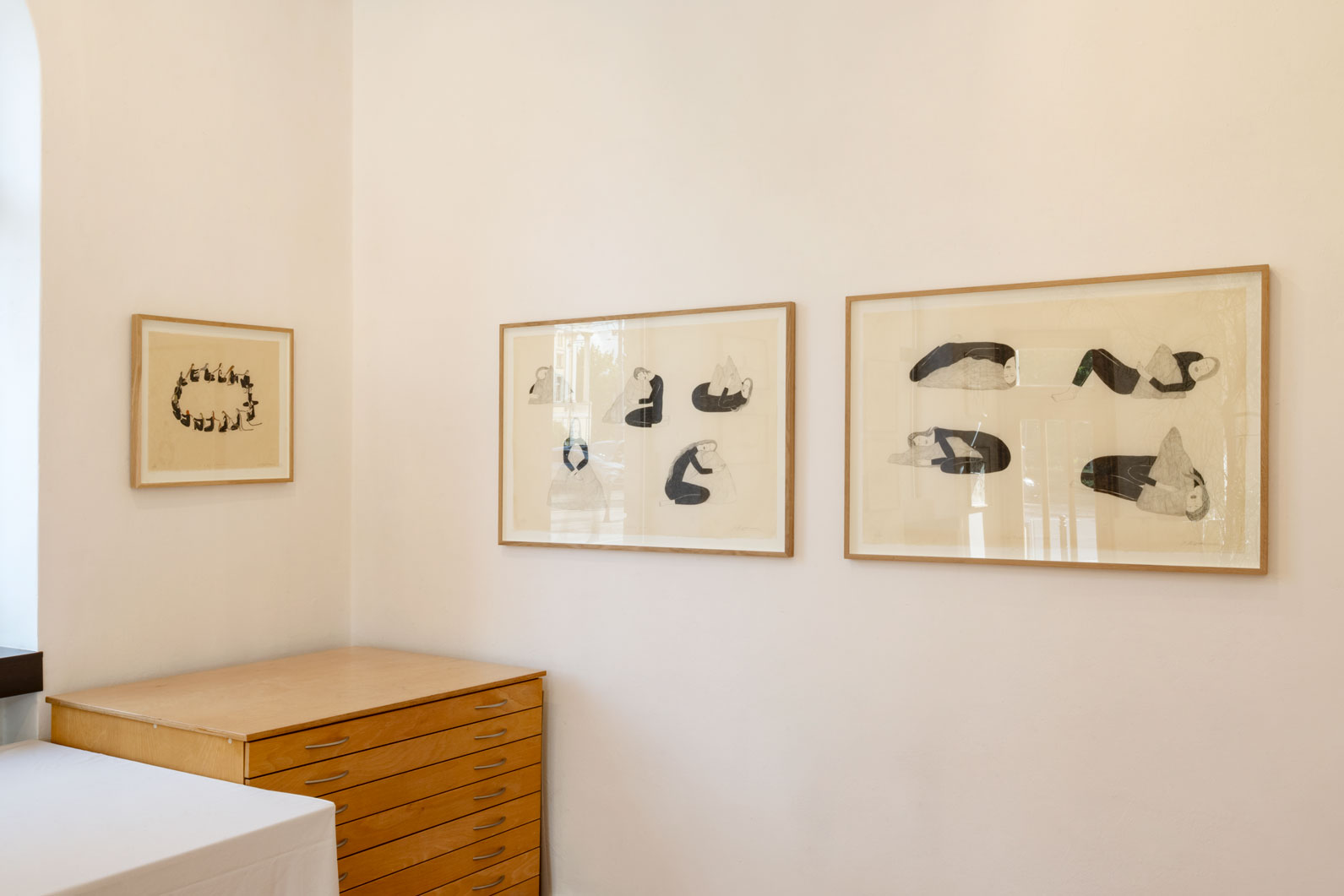
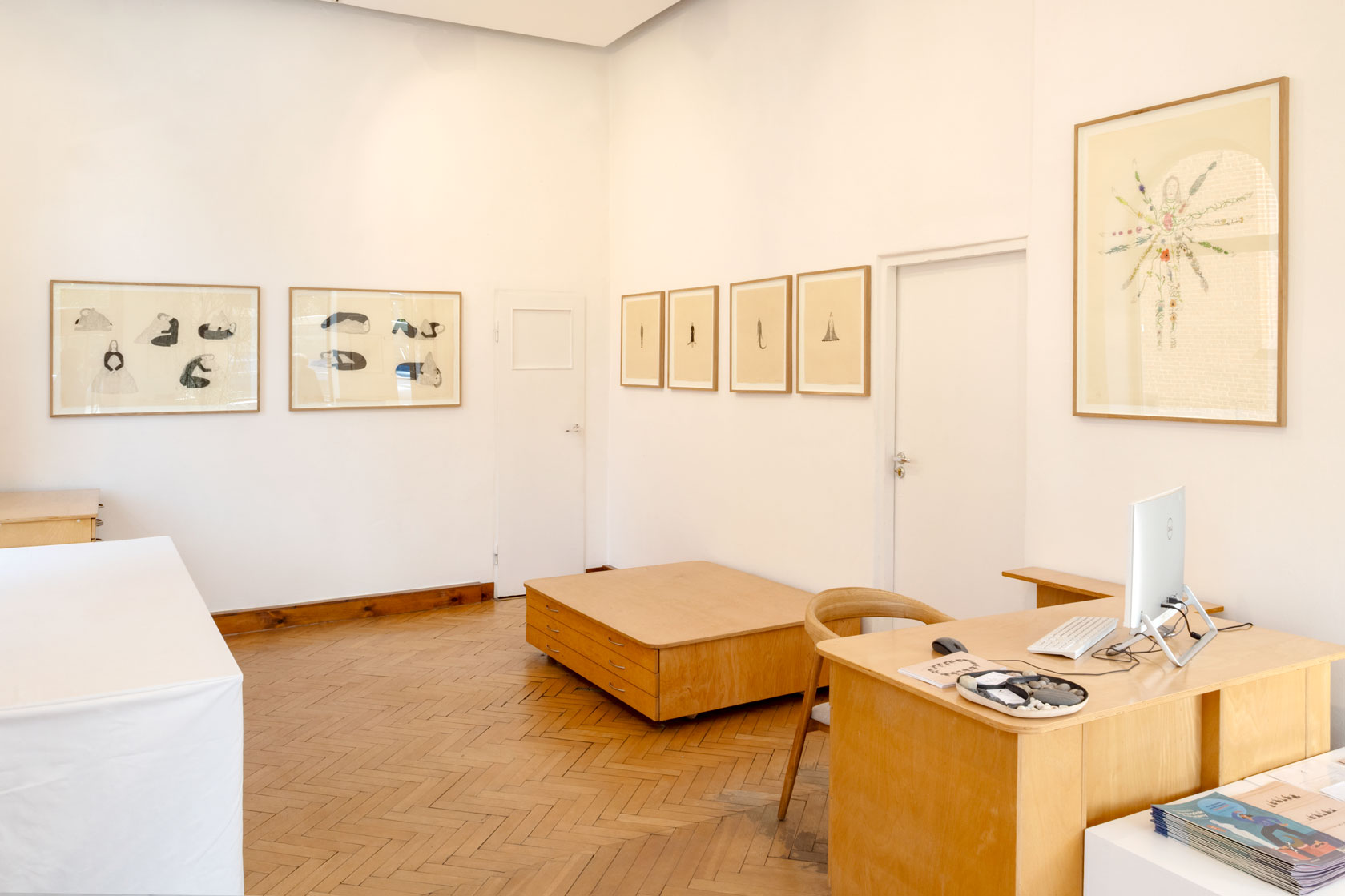
Although The Womb is not conceived as a critical exhibition, echoes of contemporary tensions reverberate throughout. Some of the figures in Niespodziewana’s drawings wear black dresses — a reference to the Black Protest that they cannot yet shed. This trace remains, yet the focus is deliberately redirected: from anger and frustration toward a space of calm, tenderness, and imagination. The Womb becomes a soft response to the surrounding chaos — a place to withdraw, to breathe, and to restore one’s inner resources in order to imagine the world otherwise.
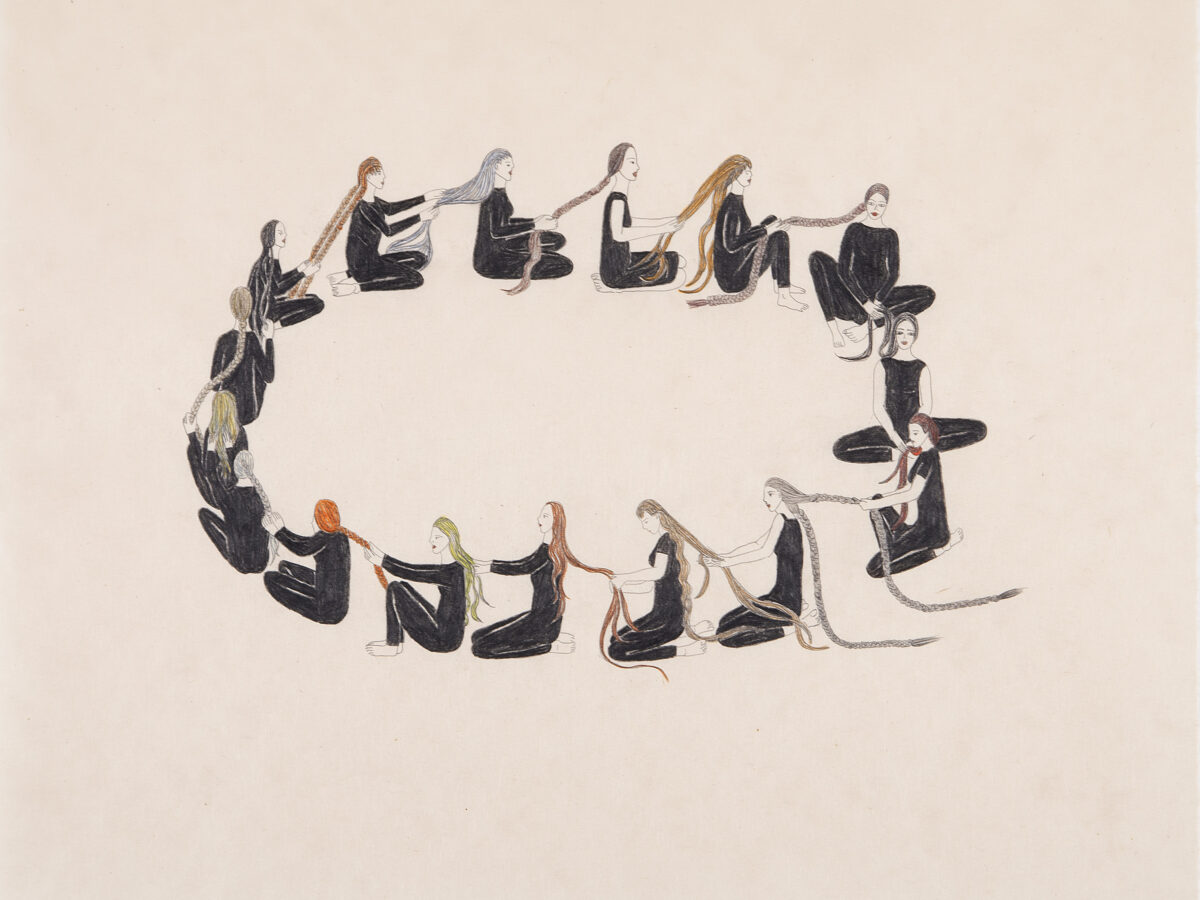
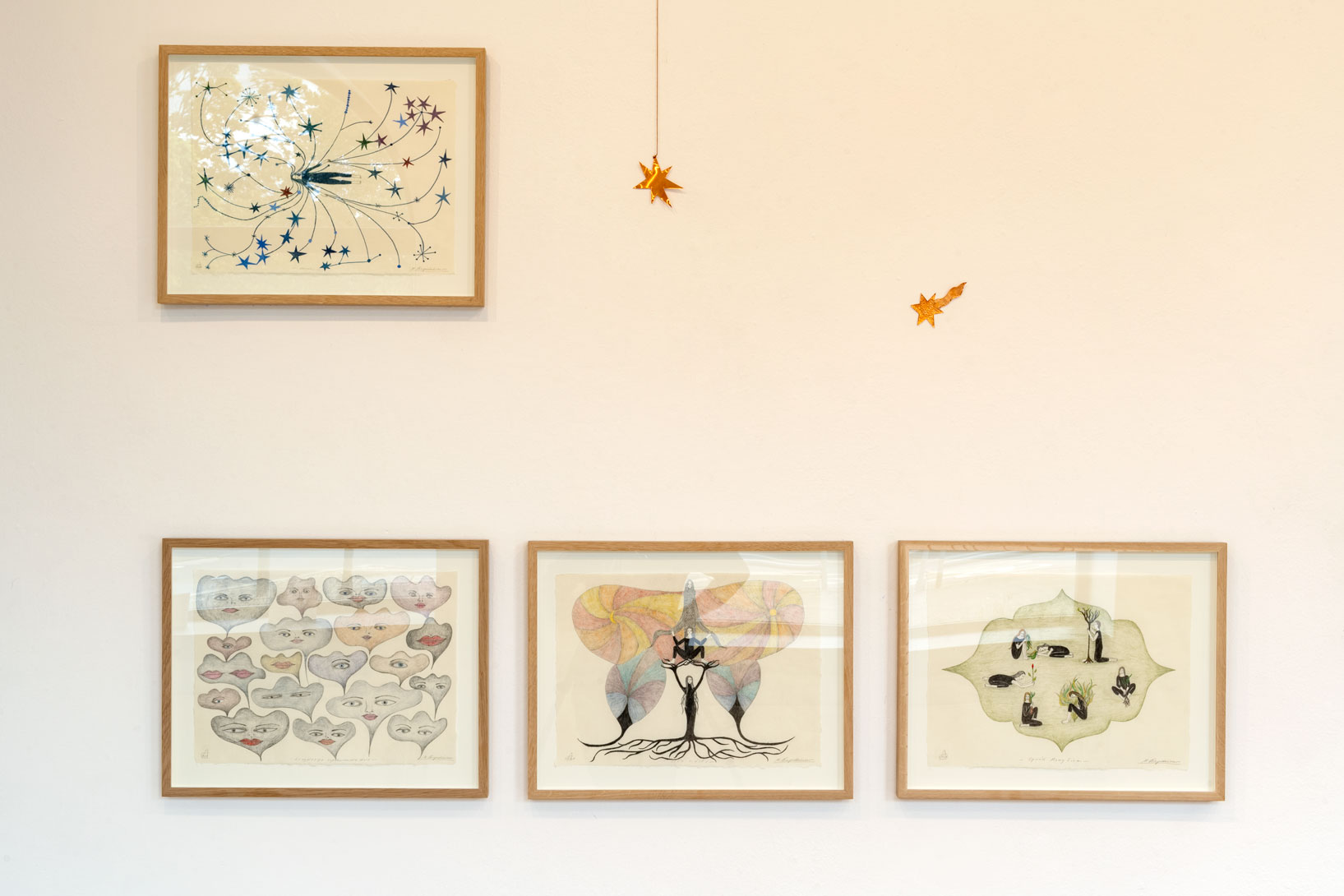
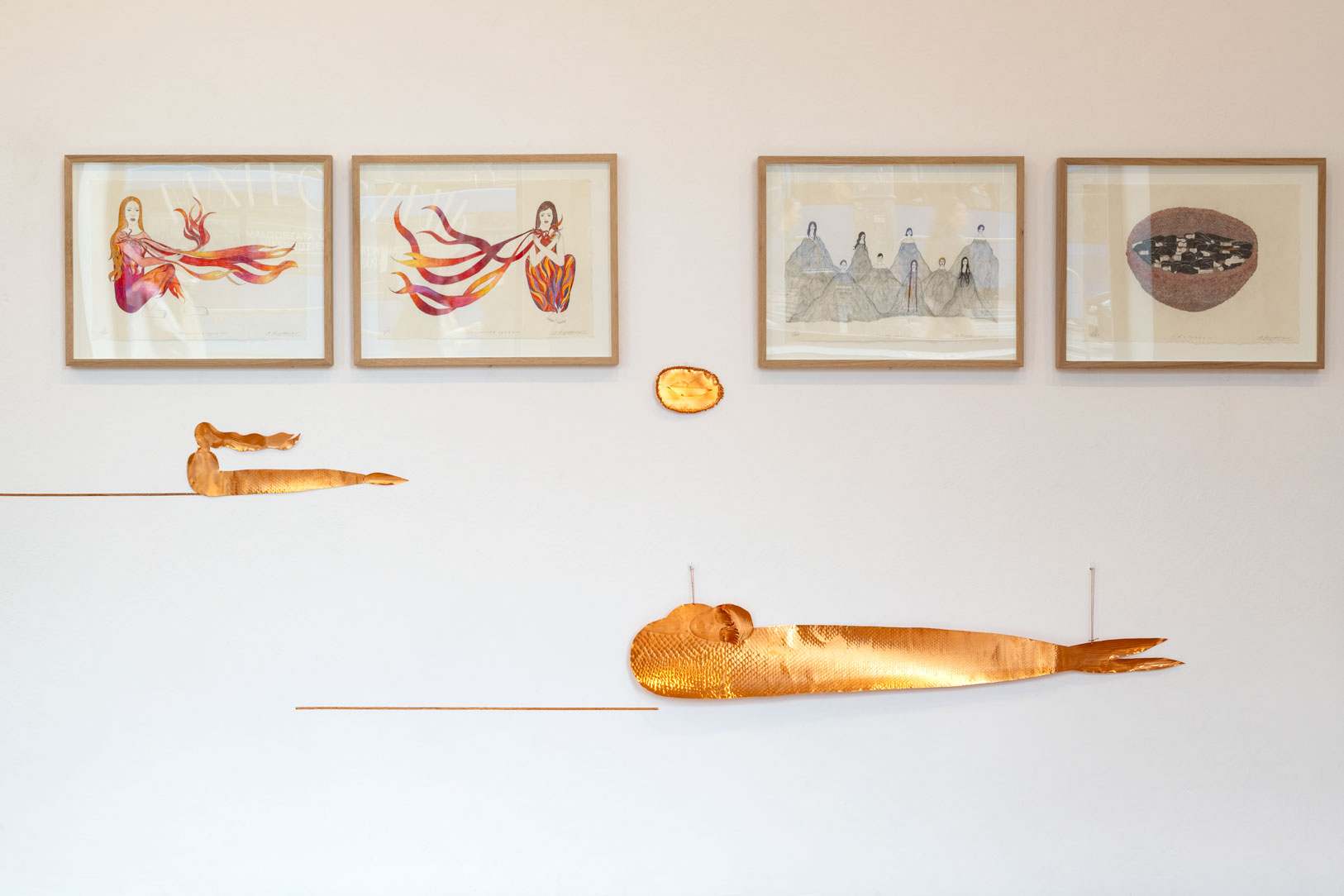
Within this renewed imaginary, the inhabitants of The Womb dissolve traditional divisions between the human and the non-human. Niespodziewana constructs her world around the idea of fluidity, which becomes a primary mode of existence. Female figures — whether in the Mother Earth cycle or in the depictions of mermaid Sisters — are in constant transformation, radically renegotiating the boundaries between species. A conceptual point of departure for this approach may be found in Leonora Carrington’s ontological declaration of being a “female human animal.” What, in Carrington’s work, was a refusal to submit to the disciplining forces of civilization and a reclamation of wildness, takes on the form of visual symbiosis in Niespodziewana’s practice.
The rejection of anthropocentric separateness allows these figures to fully merge with their surroundings. Their hybridity — women-plants, women-animals — is not merely a surrealist aesthetic device, but a posthuman strategy of resistance to the current world order. In Niespodziewana’s work, the hybrid becomes the fullest expression of sisterhood, one that extends beyond the limits of human experience. The bodies of her figures, caught in processes of mimetic transformation, coexist with living organisms, suggesting that unity with nature is not a return to a lost Arcadia, but the only viable form of the future. At the same time, the artist draws on a rich repository of myths and fairy tales, treating them as living cultural codes that continue to reshape identity.
A particular place within this topography is occupied by a Japanese thread — a distant echo of the artist’s travels and her fascination with Shinto philosophy. In the Embracing Stones series, one encounters both the rigor and the tenderness characteristic of Japanese aesthetics, where even inanimate matter — stone — is understood to possess a spirit (kami). The gesture of embracing becomes a ritual of attentiveness, an attempt to enter into dialogue with that which is enduring, silent, and primordial. This reference to the myth of the sun goddess Amaterasu and her retreat into a cave is reflected in the exhibition’s spatial logic as a search for inner light in times of darkness. Here, the stone is not a burden, but an anchor — a point of contact between the fragile human body and the enduring presence of nature.
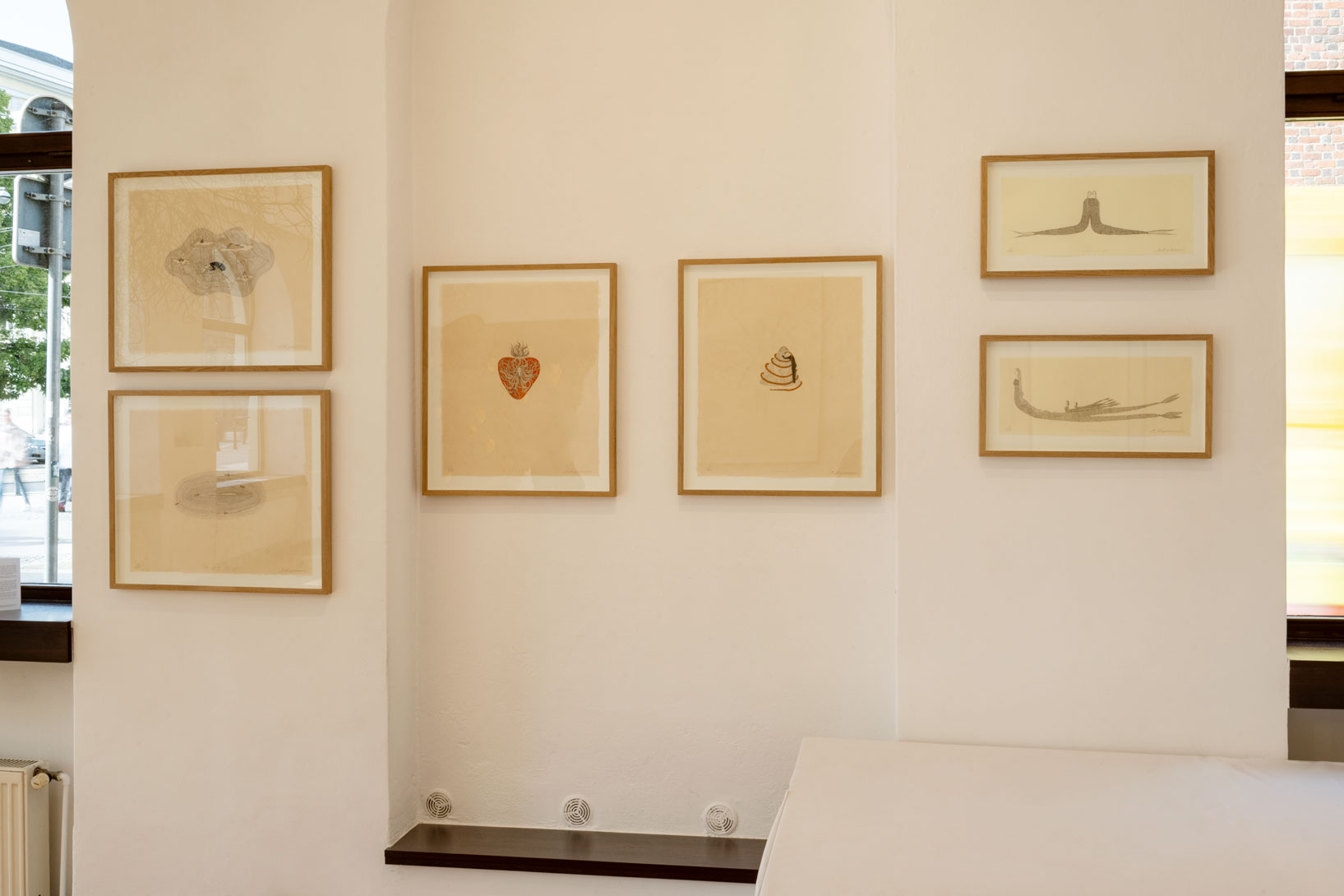
The space of The Womb is brought to a close by the figures of the Guardians. The Guardian of Hearts — a monumental figure embodying resilience and care — together with the Fire Guardians, stand as archetypal protectors of this world, ensuring that the process of regeneration remains undisturbed. Their presence lends the exhibition the character of a sanctuary, in which recurring motifs in Niespodziewana’s practice — hearts, hair, mermaid tails — function as totems of a new mythology grounded in community. In this way, the artist constructs a visual utopia that is not an escape from responsibility, but the articulation of an alternative system of values and a space for reclaiming agency — where anger is transformed into care, and isolation into rituals of intimacy. It is a vision of a world in which survival depends on our capacity to empathize with every form of existence.
Paper is an integral element of Małgorzata Malwina Niespodziewana’s practice. Her drawings and prints are created on handmade papers — including Nepalese lokta and Japanese hon-minoshi and kozo — which she collects during her travels, often directly from local craftswomen. These materials sometimes wait for years for the right moment, and their distinct textures and organic origins become an essential part of the stories they carry. This long-standing fascination with handmade paper is yet another sign of the artist’s remarkable consistency.
The Womb presents an artist with an established body of work, who develops her own narrative with rare precision, continually expanding her mythology into new territories. It is within these newly opened spaces that the wisdom of the matecznik resonates most clearly — a vision of the world constructed on one’s own terms, with confidence and strength. The return to Rothko’s “pockets of silence” and the act of putting down roots in safe places become gestures of resistance, while the exhibition itself invites us to enter this imagined world — for perhaps what is dreamed together may yet become possible.
Marta Dziedziniewicz – curator
The opening and an artist talk with Małgorzata Malwina Niespodziewana will take place on Friday, 15 May 2026 at 7 pm – you are warmly invited!
The exhibition will be on view from 15 May to 6 June 2026.
Exhibition guided tour with Małgorzata Malwina Niespodziewana and Marta Dziedziniewicz (Night of Museums): 16 May 2026 (Saturday), 6:00 PM
Media patronage: FORMAT Art Magazine